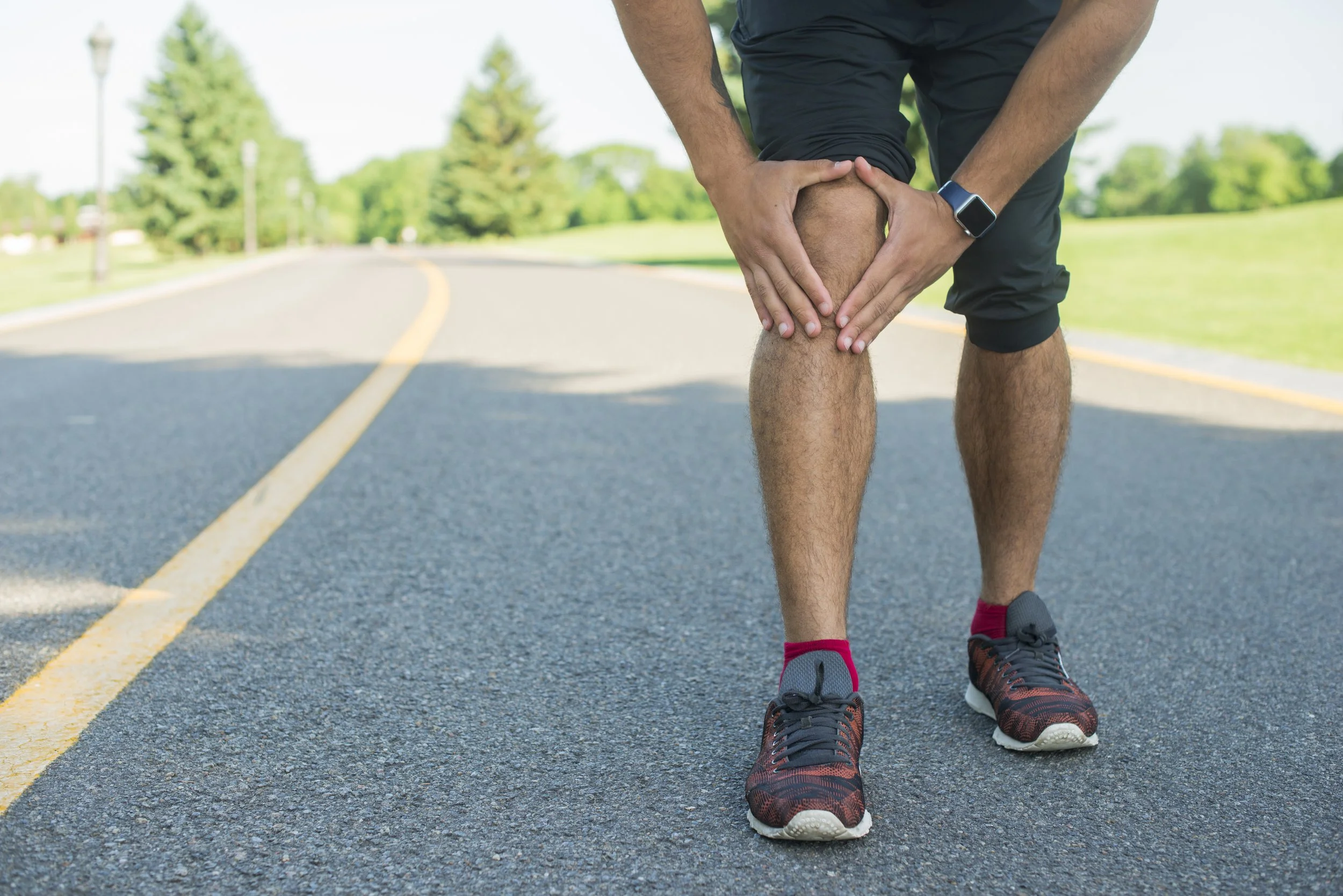
If you’ve tried to get back to running and your knee, hip, or back pain keeps returning, it’s easy to feel like your body just can’t handle it anymore. In most cases, there’s a more useful explanation, and it starts with understanding what’s happening during recovery.
Load and capacity
Every part of your body can handle a certain amount of load. You can think of that as its capacity.
Most running injuries happen when the load exceeds that capacity, often after a sharp increase in mileage, speed, or hills.
Running puts a lot of load through the body. Each step sends roughly two to three times your body weight through your leg, and you take well over a thousand steps per mile. Because of that, small gaps in capacity show up quickly.
Pain doesn’t always mean damage
Pain is a protective signal from your nervous system. Sometimes it’s protecting tissue that has actually been damaged, like a strained muscle or a tendon that’s been overloaded for a long time. That tissue needs time to heal and adapt. Muscles adapt over weeks, while tendons and ligaments take months.
(Bone stress injuries, like stress reactions and stress fractures, follow their own timeline and need a different approach.)
But a lot of the knee, hip, and back pain we see in runners involves little or no actual damage. In those cases, the area has become sensitized. Your nervous system has turned up its protective response, so loads that used to feel fine now hurt.
When that’s what’s going on, the goal is to help your body become comfortable with load again. That means building tolerance in both the tissues and the nervous system.
Why pain settles before you’re ready
Rest and treatment can calm that sensitivity down fairly quickly, often within a week or two.
But calming pain down doesn’t build tolerance, and time off actually lowers it, because your body adapts to what you ask of it. When you stop running, you lose some of your capacity to handle it.
So when the pain goes away, your capacity may still be lower than it was before. Going back to running, even at lower mileage, can push past what your body is ready for, and the pain returns.
This is the loop many runners find themselves in. The pain calms down, they run, it flares up, and they start over.
What a better return to running looks like
The process generally moves through four stages:
Calming things down. Reducing irritation without stopping all activity, since complete rest speeds up the loss of capacity.
Building capacity. Progressive strength and loading work for the painful area and the muscles that absorb running forces, then preparing for impact. This is the stage that most often gets skipped.
Reintroducing running. Short, controlled doses of running, often mixed with walking at first.
Building back to longer runs. Gradually increasing volume, with distance coming back before speed or hills.
Getting back to your usual distances often takes a few months. That’s normal. It’s the time your body needs to adapt, and a little patience goes a long way here.
Stride length and pace are useful tools along the way. Adjusting them changes how much load each step puts on the painful area, which can let you keep running while you build capacity.
Why it helps to have guidance
The hard part is knowing what’s driving your pain and how much you can handle right now. Healing tissue and a sensitized area can call for different pacing.
Progress too fast and you’re back in pain. Too slow and you lose time you didn’t need to.
A knowledgeable clinician knows which questions to ask, what to test, and how to read your body’s response, both during activity and over the next day or two. That way you’re not guessing.
If you’ve been stuck in this cycle
If your pain keeps returning every time you try to run, tell us what you’re trying to get back to, whether that’s your usual weekly mileage, a race, or just running without thinking about your knee. We’ll help you figure out a good place to start.