Is Your Body More Capable Than You've Been Told?
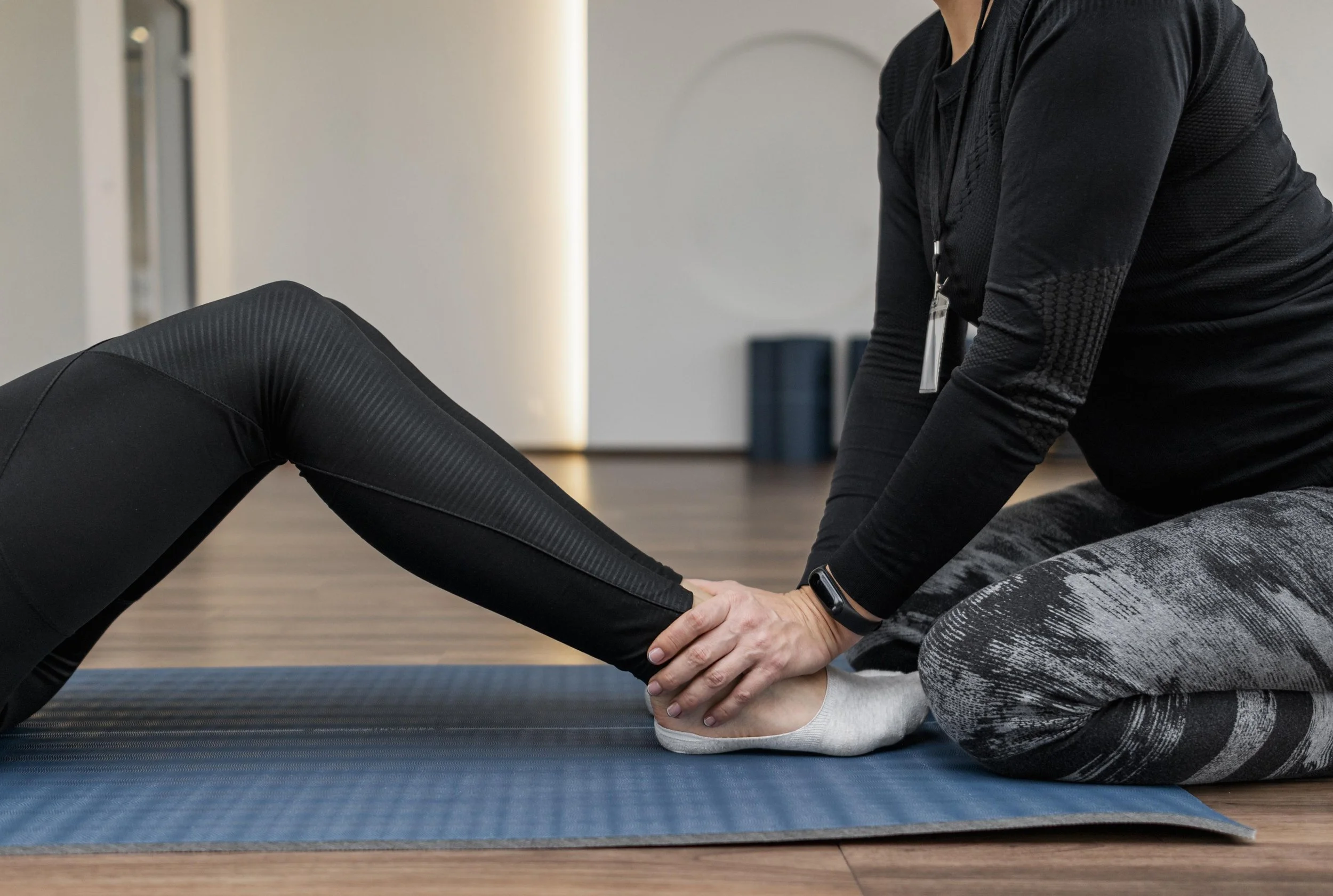
A lot of people come to us wanting to get back to exercise but unsure what's actually safe. Often they've picked up a reason to be careful along the way: something on an X-ray, a comment about their posture, or a word like "degeneration" that stuck with them and never quite let go.
Those findings are usually real. But they rarely tell the whole story, and the part they leave out tends to be the most encouraging part.
Anterior Pelvic Tilt: A Normal Variation, Not a Prerequisite
Anterior pelvic tilt describes a posture where the front of the pelvis tips slightly forward. It's a normal postural variation that shows up in people with back pain and in people without it. On its own, it doesn't explain why someone's back hurts. It may be one detail worth noticing as part of a bigger picture, but it isn't a diagnosis.
That also means you don't need to "fix" it before you can get stronger. Plenty of people build strength, run, and lift while carrying this exact posture.
Uneven Hips: Common, Not a Diagnosis
The same goes for uneven hips. Most people have some degree of asymmetry, and most of them have no pain at all. Bodies are rarely perfectly symmetrical, and a difference from one side to the other doesn't automatically mean something is wrong.
Arthritis Deserves a Closer Look
Arthritis is a different situation, and it's worth being straightforward about it. It's real, and it can contribute to pain. But it's also present in most people over 40, including plenty of people who feel great and stay very active.
So what separates the people who hurt from the people who don't? It doesn't seem to come down to how much arthritis shows up on imaging. A better question is how much load the joint and the tissues around it are currently prepared to handle. Two people can have a similar X-ray and very different experiences, depending on how well their muscles, tendons, and joints are conditioned for what they're asking of them.
Imaging can be genuinely useful when it's clinically appropriate. The point is that a picture needs to be interpreted alongside how you move, what you do, and what you're prepared for, rather than read as a verdict on what you can or can't do.
What You Can't Change, and What You Can
This is the useful distinction. You can't reverse arthritis, but you can build capacity. Joints, muscles, and tendons adapt to what you ask of them when you progress gradually. That's true at 25, and it's still true at 65.
When pain flares, it's often a sign that you've asked for a bit more than you've prepared for, whether that's a bigger hike, a heavier week in the gym, or a long day in the garden after a quiet few months. That doesn't automatically mean something is damaged, and it doesn't mean you should give up on movement. It usually means the dose needs adjusting.
Start Where Your Body Is Today
So instead of focusing on what you can't change, we focus on what you can: finding a starting point your body tolerates today and building from there. That might mean a shorter run, a lighter load, or a different variation of an exercise, with a plan to progress as your body adapts.
If there's something you've been holding off on, whether it's running, lifting, hiking, or keeping up with your kids or grandkids, it may be more within reach than you think.
Frequently Asked Questions
Can I exercise if I have arthritis?
In many cases, yes. Arthritis is common, and plenty of people with it stay active and feel good. What matters is finding a level of activity your joints and surrounding tissues can currently tolerate, then progressing gradually. If you're unsure, it's worth having someone look at your specific situation.
Does arthritis on an X-ray mean I should avoid running or lifting?
Not automatically. Arthritis shows up on imaging in most people over 40, including many who have no pain at all. What you see on an X-ray doesn't tell you how much load your body is prepared to handle.
Do I need to fix my anterior pelvic tilt before I start strength training?
Generally, no. It's a normal postural variation that appears in people with and without back pain. Most people can start building strength without changing it first.
Are uneven hips a problem?
Usually not on their own. Some asymmetry is very common, and most people who have it never experience pain because of it.
Does "degeneration" in my report mean my spine or joints are damaged?
It's a term that sounds more alarming than it usually is. Degenerative changes are common age-related findings that show up in many people without pain. They're worth understanding in context, but they rarely mean you need to stop moving.
Why does my pain flare up when I do more than usual?
A flare often means the activity asked for a bit more than your body was prepared for at that moment. That's a signal to adjust the amount, not necessarily a reason to give up on the activity.
If You've Been Holding Off on Something You Want to Get Back To
If you've been avoiding running, lifting, hiking, or keeping up with your family because of something you were told about your body, it may be worth a second look. At Momenta Chiropractic, we work with people around Bryn Mawr, the Main Line, and Philadelphia to find a smart starting point and build from there. Reach out and tell us what you want to get back to, and we'll help you figure out where to begin.