Flexion Distraction Therapy (Spinal Decompression)
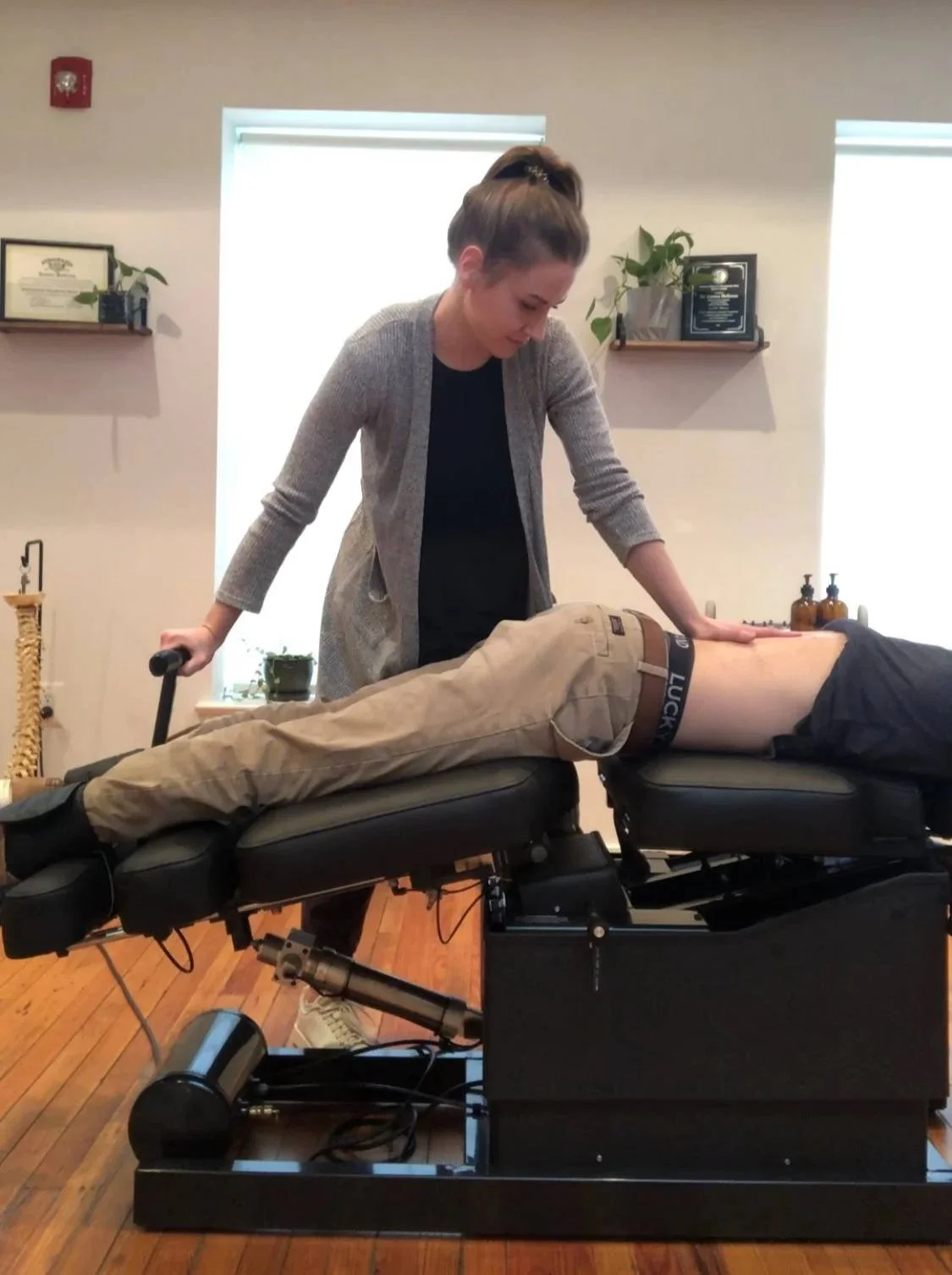
What Is Spinal Decompression Therapy? How Flexion Distraction Helps Back Pain and Sciatica
If you've ever experienced low back pain that travels into your buttock, leg, or foot, you've probably come across the term "spinal decompression."
It's often recommended for people dealing with:
Herniated discs
Sciatica
Spinal stenosis
Chronic lower back pain
One type of spinal decompression commonly used by chiropractors is called Flexion Distraction Therapy.
But what exactly is it, and how does it work?
What Is Flexion Distraction Therapy?
Flexion Distraction Therapy is a gentle, non-surgical spinal decompression technique designed to reduce pressure on the joints, discs, and nerves of the lower back.
The treatment uses a specialized table that allows the lower body to move through controlled motions including:
Flexion (forward bending)
Extension (backward movement)
Side-to-side movement
Gentle traction
During treatment, the chiropractor applies specific movements and gentle pressure to targeted areas of the spine.
The goal is to improve mobility, reduce irritation, and decrease pressure on sensitive structures within the lower back.
What Is Spinal Decompression?
Spinal decompression refers to treatments that reduce pressure on spinal joints, discs, and nerves.
Many lower back conditions involve some degree of compression or irritation.
Examples include:
Disc herniations
Sciatica
Spinal stenosis
Degenerative disc changes
Facet joint irritation
By reducing pressure within these structures, many people experience improvements in pain, stiffness, and movement.
How Does Flexion Distraction Therapy Work?
The treatment works through two primary mechanisms:
1. Joint Decompression
The spine contains small joints called facet joints.
These joints help guide movement and provide stability.
When these joints become irritated, stiff, or compressed, they can contribute to lower back pain.
Flexion Distraction Therapy gently creates space within these joints.
This decompression may help:
Reduce pain
Improve mobility
Decrease stiffness
Improve movement tolerance
2. Disc Decompression
The lumbar discs act as cushions between the vertebrae.
When a disc becomes injured or herniated, it can place pressure on nearby nerves and contribute to symptoms such as:
Low back pain
Sciatica
Leg pain
Numbness
Tingling
Flexion Distraction Therapy may help reduce pressure within the disc itself.
This change in pressure is thought to encourage movement of disc material away from irritated nerve structures, potentially reducing symptoms over time.
Can Flexion Distraction Help Sciatica?
Sciatica is one of the most common reasons people seek spinal decompression treatment.
Sciatica occurs when the sciatic nerve becomes irritated, often due to:
Disc herniations
Spinal stenosis
Degenerative changes
Nerve compression
Common symptoms include:
Pain down the leg
Tingling
Numbness
Burning sensations
Weakness
Because Flexion Distraction Therapy is designed to reduce pressure on discs and nerves, it is frequently used as part of a treatment plan for sciatica-related symptoms.
Can Spinal Decompression Help a Herniated Disc?
Many people with lumbar disc herniations are looking for options that don't involve surgery.
While every case is different, spinal decompression techniques are commonly used as part of conservative care for disc-related conditions.
The goal isn't simply symptom relief.
The goal is helping people:
Move more comfortably
Improve function
Return to activity
Reduce nerve irritation
Treatment is often most effective when combined with movement-based rehabilitation and exercise.
What Conditions Is Flexion Distraction Therapy Used For?
Flexion Distraction Therapy is commonly used for:
Lower Back Pain
Both acute and chronic low back pain may respond well to decompression-based treatment approaches.
Lumbar Disc Herniations
Particularly when symptoms involve nerve irritation or sciatica.
Sciatica
Leg pain, numbness, and tingling associated with sciatic nerve irritation.
Spinal Stenosis
Reduced space around spinal nerves can contribute to symptoms that may benefit from decompression.
Arthritis and Degenerative Changes
Joint irritation and stiffness may improve when mobility and joint motion are restored.
Facet Syndrome
Pain originating from the facet joints of the lower back.
Why We Combine Spinal Decompression With Other Treatments
At Momenta Chiropractic, we rarely rely on a single treatment approach.
While spinal decompression can help reduce irritation and improve movement, long-term improvement often requires addressing the underlying factors contributing to the problem.
This may include:
Chiropractic adjustments
Myofascial release
Soft tissue therapy
Mobility exercises
Strength training
Rehabilitation exercises
Our goal isn't simply helping symptoms calm down.
It's helping people build the strength, confidence, and capacity to return to the activities they enjoy.
Is Flexion Distraction Therapy Right for Everyone?
Not necessarily.
The best treatment depends on:
Your diagnosis
Your symptoms
Your movement patterns
Your goals
Your medical history
A thorough examination helps determine whether spinal decompression is appropriate and how it fits into a larger treatment plan.
Frequently Asked Questions
What is Flexion Distraction Therapy?
Flexion Distraction Therapy is a gentle spinal decompression technique used to reduce pressure on spinal joints, discs, and nerves.
Can spinal decompression help sciatica?
Many people with sciatica receive spinal decompression as part of a treatment plan designed to reduce nerve irritation and improve function.
Does spinal decompression help herniated discs?
Spinal decompression is commonly used as a conservative treatment option for lumbar disc herniations.
Is Flexion Distraction painful?
Most patients describe the treatment as gentle and comfortable. Many report feeling a stretching or relieving sensation during treatment.
Is spinal decompression surgery?
No. Flexion Distraction Therapy is a non-surgical treatment approach.