Instrument Assisted Soft Tissue Mobilization (IASTM)
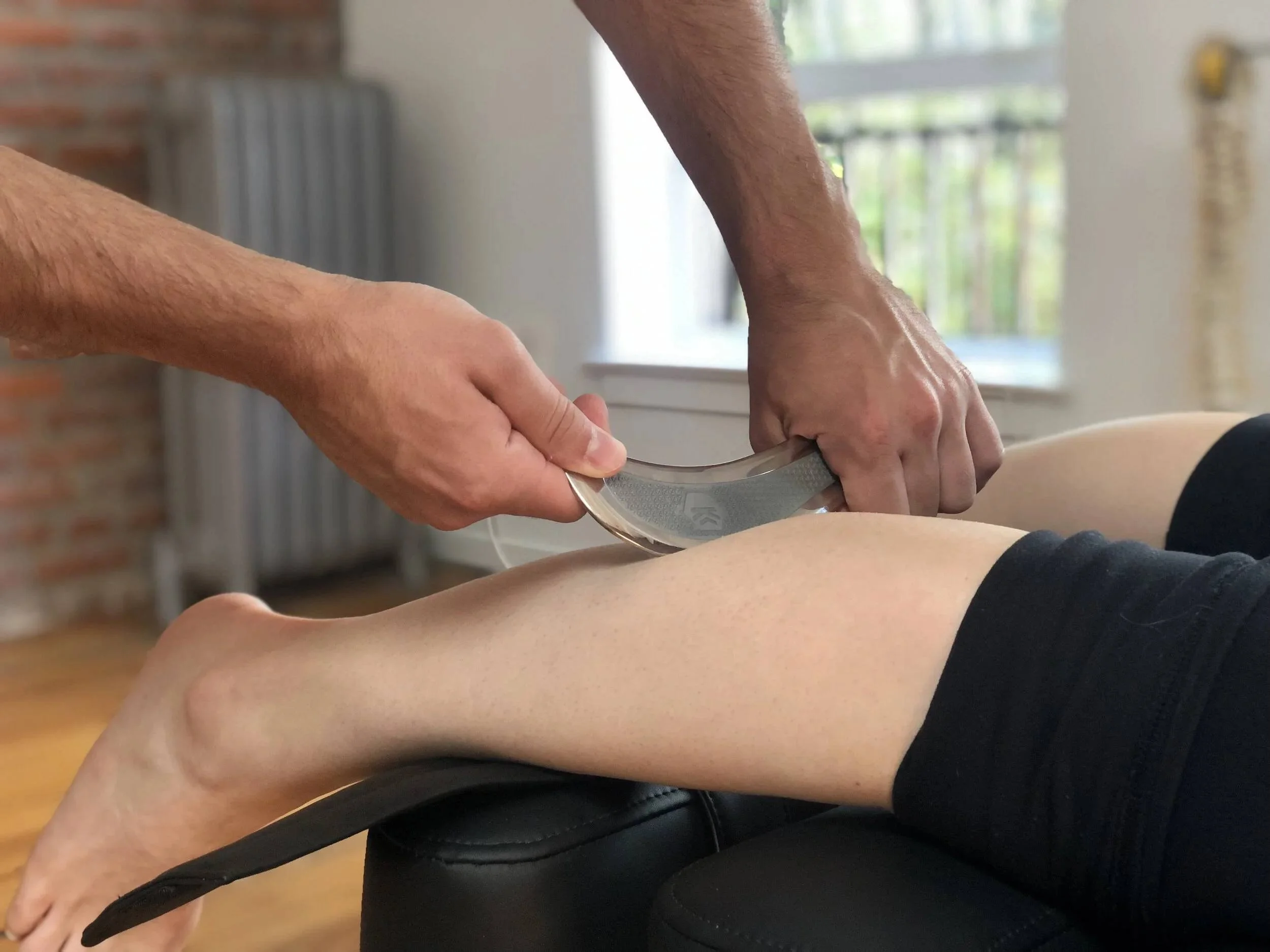
What Is Instrument Assisted Soft Tissue Mobilization (IASTM) and How Does It Help Recovery?
If you've ever dealt with a lingering injury that feels stiff, tight, or like it never fully healed, you've probably wondered why.
The pain may be gone.
The swelling may have resolved.
But the area still doesn't feel normal.
Many people describe it as:
Tight
Restricted
Stiff
Weak
Not moving the way it used to
One treatment commonly used to address these issues is called Instrument Assisted Soft Tissue Mobilization, or IASTM.
What Is Instrument Assisted Soft Tissue Mobilization (IASTM)?
IASTM is a soft tissue treatment technique that uses specially designed stainless steel instruments to assess and treat muscles, tendons, ligaments, and fascia.
The goal is to improve tissue mobility and support the healing process following injury.
You may have heard similar terms such as:
Muscle scraping
Scraping therapy
Graston Technique
Soft tissue mobilization
While there are differences between specific systems and techniques, they all share a similar goal:
Helping restricted soft tissues move and function more effectively.
Why Do Injured Tissues Become Tight?
After an injury, the body begins repairing damaged tissue.
This healing process is important.
However, the body doesn't always lay down new tissue perfectly.
As healing occurs, scar tissue and adhesions can develop.
These restrictions may contribute to:
Stiffness
Reduced mobility
Tightness
Pain during movement
Altered movement patterns
This is especially common after:
Ankle sprains
Muscle strains
Tendon injuries
Surgery
Repetitive overuse injuries
Many people notice that the injury technically healed, but the area never quite feels the same.
How Does IASTM Work?
IASTM uses stainless steel tools to apply controlled pressure to affected tissues.
The treatment helps clinicians identify areas of restriction and tissue dysfunction.
The mechanical stimulation created by the instrument may help:
Improve circulation
Stimulate tissue remodeling
Increase mobility
Improve tissue tolerance
Promote healthier movement patterns
The treatment also creates a local healing response.
This response helps draw blood flow and healing factors into the area.
As part of the body's natural recovery process, damaged tissue may be remodeled and replaced with healthier, more organized tissue over time.
Is IASTM the Same as Graston Technique?
Many people use these terms interchangeably.
The Graston Technique is actually one specific brand and system of instrument-assisted soft tissue mobilization.
IASTM is the broader category.
Think of it like:
Tissue = category
Graston = one specific approach
The overall goals are very similar.
What Conditions Can IASTM Help?
IASTM is commonly used for a wide range of musculoskeletal conditions.
Tendon Injuries
Including:
Achilles tendinitis
Patellar tendinitis
Rotator cuff tendinopathy
Tennis elbow
Golfer's elbow
Foot and Ankle Conditions
Such as:
Plantar fasciitis
Heel pain
Shin splints
Ankle sprains
Muscle Injuries
Including:
Hamstring strains
Quadriceps strains
Calf strains
Spine-Related Pain
Including:
Low back pain
Neck pain
Chronic stiffness
Scar Tissue Restrictions
Particularly following:
Surgery
Significant injury
Repetitive stress conditions
Does IASTM Hurt?
This is one of the most common questions patients ask.
The answer depends on the condition being treated and the sensitivity of the tissue.
Some areas may feel mildly uncomfortable during treatment, particularly if they are already irritated or restricted.
However, treatment should be tolerable and can be adjusted based on the individual's comfort level.
Many patients report feeling looser or moving more freely afterward.
Why We Combine IASTM With Exercise and Rehabilitation
One of the biggest misconceptions about soft tissue treatments is that they fix everything on their own.
In reality, improved tissue mobility is often just the first step.
Long-term improvement usually comes from combining treatment with:
Strength training
Mobility work
Rehabilitation exercises
Movement retraining
Progressive loading
At Momenta Chiropractic, we frequently use IASTM as one tool within a larger treatment plan designed to help people move better and return to the activities they enjoy.
Is IASTM Right for You?
Not every injury requires instrument-assisted soft tissue mobilization.
The best treatment depends on:
Your symptoms
Your injury history
How long the problem has been present
Your movement patterns
Your goals
A thorough assessment helps determine whether IASTM is likely to be beneficial and how it fits into a broader recovery plan.
Frequently Asked Questions
What is IASTM?
Instrument Assisted Soft Tissue Mobilization (IASTM) is a treatment technique that uses specialized tools to address soft tissue restrictions and support recovery.
Is IASTM the same as scraping therapy?
Yes. Many people refer to IASTM as scraping therapy because specialized instruments are used on the skin and underlying tissues.
Can IASTM break up scar tissue?
IASTM is often used to help improve mobility and tissue quality in areas affected by scar tissue and adhesions.
Does IASTM help plantar fasciitis?
Many clinicians use IASTM as part of a treatment plan for plantar fasciitis, particularly when tissue restrictions are contributing to symptoms.
How many IASTM treatments are needed?
The number of treatments varies depending on the condition, severity, and overall treatment goals.