Cupping Therapy
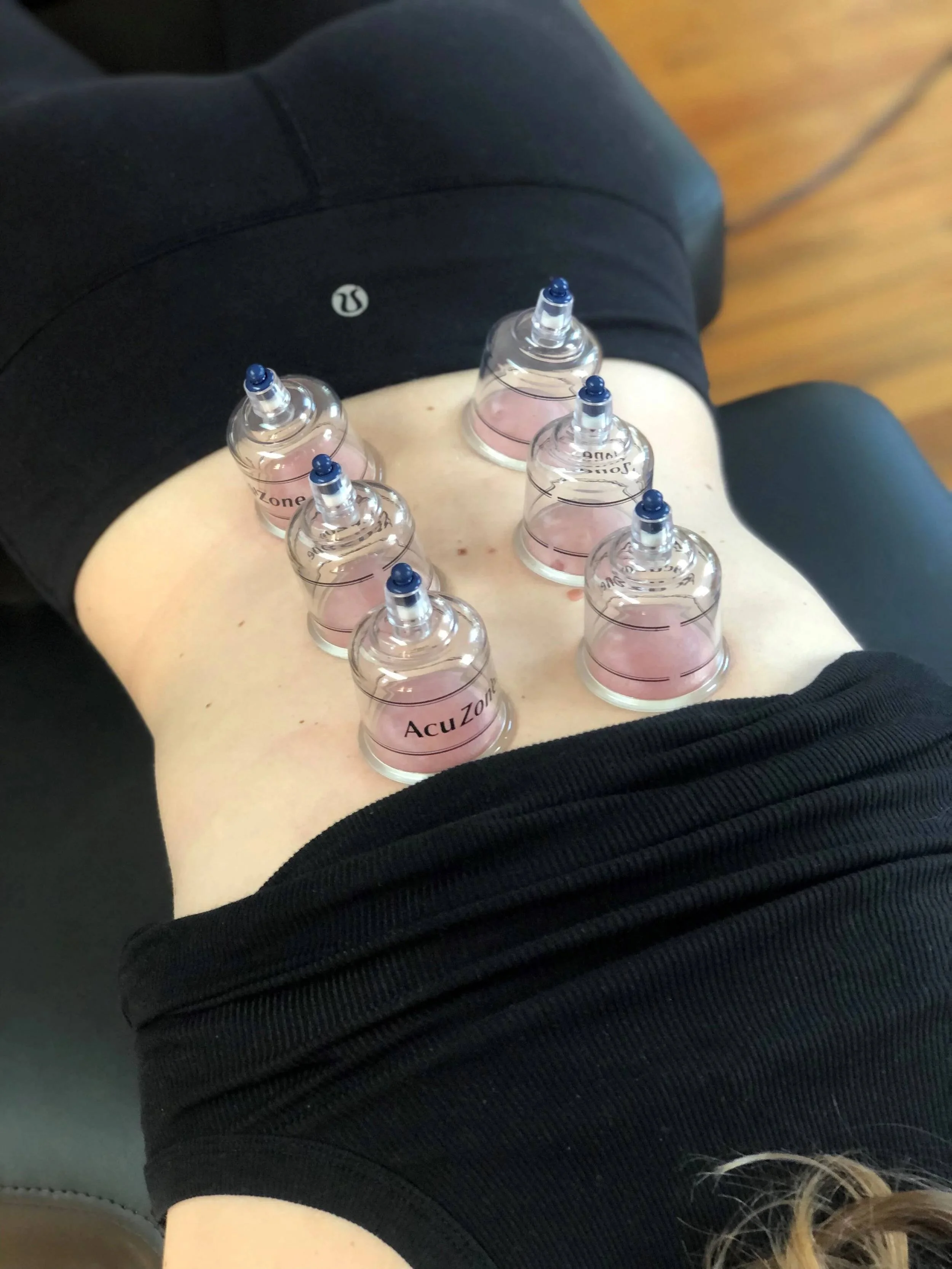
What Is Cupping Therapy? Benefits, Uses, and Why Athletes Use It
If you've ever watched the Olympics or professional sports, you've probably noticed athletes with large circular marks on their backs, shoulders, or legs.
Those marks are often the result of cupping therapy.
Over the last decade, cupping has become increasingly popular among athletes and active adults looking for ways to manage muscle tension, improve recovery, and stay active.
But what exactly is cupping therapy, and does it actually work?
What Is Cupping Therapy?
Cupping therapy is a treatment that uses suction to lift the skin and underlying tissues.
During treatment, specialized cups are placed on the skin and air is removed from the cup, creating a vacuum effect.
This gentle suction lifts the skin and soft tissues upward rather than applying pressure downward like traditional massage.
At Momenta Chiropractic, we use dry cupping therapy, which means:
No fire
No skin puncturing
No bleeding
The treatment is safe, non-invasive, and commonly used alongside chiropractic care, rehabilitation, and other movement-based therapies.
How Does Cupping Therapy Work?
The suction created beneath the cup temporarily changes pressure within the tissues.
As a result, the body responds by increasing circulation to the area.
This increased blood flow may help:
Improve tissue mobility
Reduce muscle tension
Promote recovery
Support healing processes
Improve local circulation
The suction may also encourage lymphatic drainage, helping the body move fluids and metabolic waste products more efficiently.
Many people describe the sensation as a deep stretch or decompression effect.
Why Does Cupping Leave Marks?
One of the most common questions about cupping is:
"Why do the circles appear afterward?"
The marks are caused by changes in blood flow beneath the skin.
They are not bruises in the traditional sense.
Instead, the discoloration is a response to the temporary pressure changes created by the cups.
These marks typically fade within several days to a couple of weeks depending on the individual and the intensity of treatment.
Importantly, darker marks do not necessarily mean more injury or more benefit.
Everyone responds differently.
What Are the Benefits of Cupping Therapy?
While research on cupping continues to evolve, many people report improvements in:
Muscle Tension
Cupping is commonly used to help reduce tightness in areas such as:
Neck
Shoulders
Upper back
Low back
Hips
Legs
Mobility
Some people find that movement feels easier and less restricted following treatment.
Recovery
Athletes often use cupping as part of their recovery strategy between training sessions.
Relaxation
Many patients report a feeling of reduced tension and improved overall well-being following treatment.
What Conditions Is Cupping Commonly Used For?
At Momenta Chiropractic, cupping is often used as a complementary treatment for musculoskeletal conditions including:
Back Pain
Both acute and chronic low back pain may involve muscle tension and soft tissue restrictions that respond well to cupping.
Neck Pain
Especially for individuals who spend long hours at a desk or experience postural strain.
Headaches and Migraines
Tension within the neck and upper back can contribute to certain headache patterns.
Shoulder Pain
Cupping may be used to address muscle tightness surrounding the shoulder complex.
Knee Pain
Soft tissue restrictions above and below the knee can sometimes influence movement and comfort.
Tendinitis and Overuse Injuries
Including:
IT band syndrome
Tendinitis
Bursitis
Sports-related muscle tightness
Why Do Athletes Use Cupping?
Professional athletes often place significant stress on their bodies.
As a result, many incorporate recovery strategies designed to help them maintain training volume and performance.
Cupping is commonly used by:
Runners
Weightlifters
Swimmers
Golfers
CrossFit athletes
Professional sports teams
While cupping isn't a magic solution, many athletes find it helpful as part of a larger recovery and performance plan.
Is Cupping Better Than Massage?
Not necessarily.
Each treatment works differently.
Massage generally applies pressure into the tissue.
Cupping applies suction and lifts the tissue.
Because they affect tissues differently, many practitioners use both depending on the individual's goals and presentation.
Why We Combine Cupping With Chiropractic and Rehab
At Momenta Chiropractic, we rarely rely on a single treatment approach.
Cupping may help reduce tension and improve tissue mobility, but long-term results often come from combining treatment with:
Chiropractic adjustments
Mobility exercises
Strength training
Movement-based rehabilitation
The goal isn't simply temporary relief.
The goal is helping people move better, stay active, and build resilience over time.
Frequently Asked Questions
Does cupping therapy hurt?
Most people describe cupping as a stretching or pulling sensation rather than pain. Treatment intensity can be adjusted based on comfort.
Are cupping marks bruises?
Not exactly. The marks are caused by changes in circulation and pressure beneath the skin and are typically temporary.
How long do cupping marks last?
Most marks fade within several days to two weeks.
Can cupping therapy help back pain?
Many people use cupping therapy as part of a treatment plan for back pain, especially when muscle tension and stiffness are contributing factors.
Is cupping therapy safe?
Dry cupping performed by a trained healthcare provider is generally considered safe for most individuals.
How often should you get cupping therapy?
This depends on the condition being treated, activity level, and overall treatment goals.