Myofascial Release
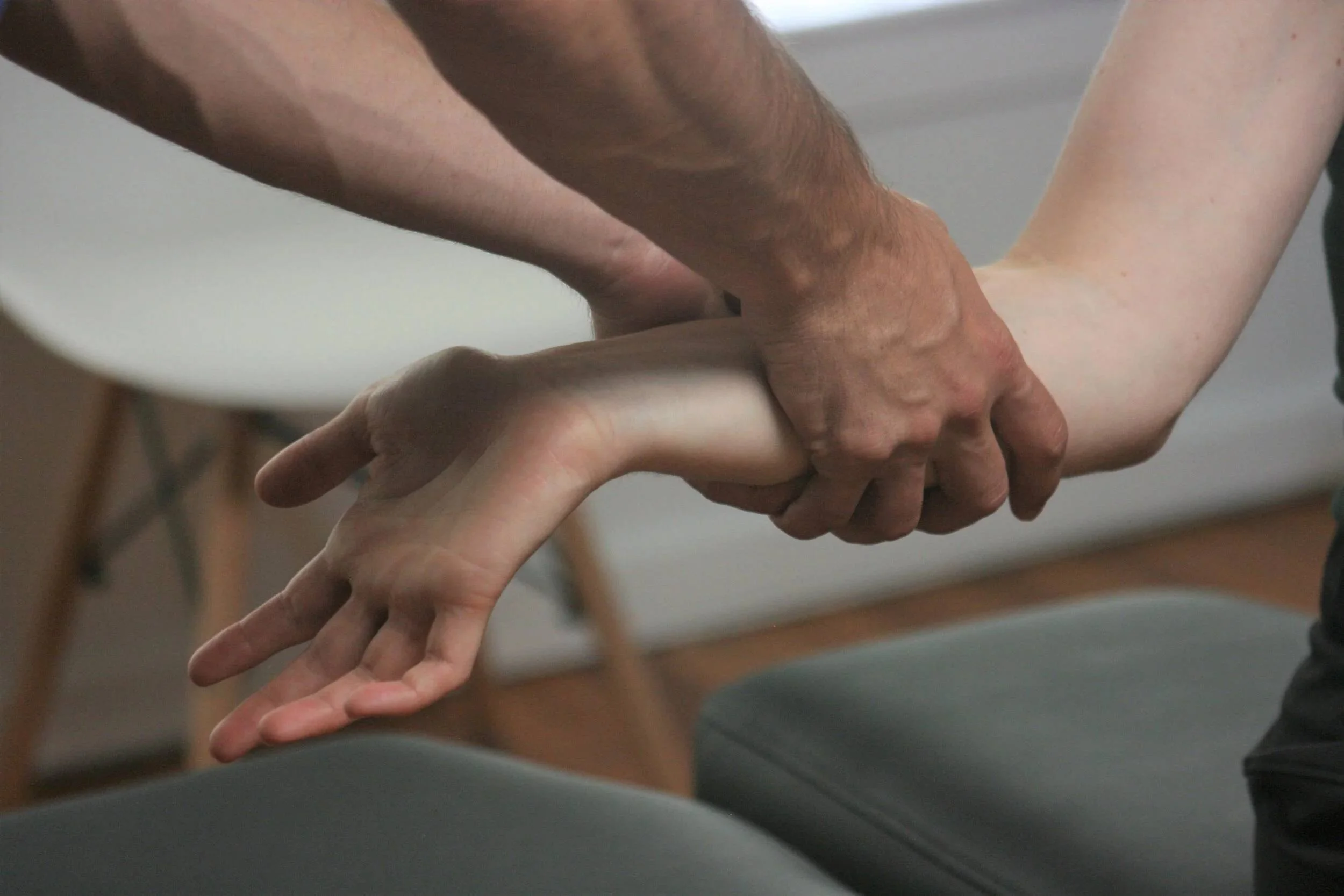
What Is Myofascial Release? How It Helps Reduce Muscle Tightness and Improve Movement
If you've ever described a muscle as feeling "tight," "knotted," or like it just won't loosen up no matter how much you stretch, you're not alone.
Many people experience chronic muscle tightness, stiffness, or painful areas that seem to linger for weeks, months, or even years.
One treatment often used to address these issues is called myofascial release.
But what exactly is it, and how does it work?
What Is Myofascial Release?
Myofascial release is a hands-on treatment technique used to address restrictions within the muscles and fascia of the body.
The term "myofascial" refers to the relationship between:
Muscles ("myo")
Fascia ("fascial")
These two structures work together to help us move, stabilize joints, and tolerate physical demands throughout daily life.
When restrictions develop within this system, people often experience pain, stiffness, reduced mobility, or the feeling of persistent muscle tightness.
The goal of myofascial release is to improve movement, reduce discomfort, and restore healthier function to affected tissues.
What Is Fascia?
Most people are familiar with muscles.
Fascia is less well known.
Fascia is a thin layer of connective tissue that surrounds and supports muscles, bones, nerves, organs, and blood vessels throughout the body.
Think of it as a continuous web that connects everything together.
Healthy fascia allows tissues to glide smoothly during movement.
When fascia becomes restricted, movement may become more difficult, uncomfortable, or inefficient.
What Causes Fascia to Become Tight?
Several factors can contribute to fascial restrictions and muscle tightness.
Common causes include:
Repetitive Stress
Performing the same movements repeatedly can place ongoing stress on specific tissues.
Examples include:
Desk work
Repetitive lifting
Sports participation
Long periods of driving
Sedentary Lifestyle
Spending prolonged periods sitting or moving less frequently can contribute to stiffness and reduced tissue mobility.
Injury or Trauma
Sprains, strains, falls, surgeries, and other injuries can create protective tension within muscles and connective tissue.
Stress
Physical and emotional stress can influence muscle tension throughout the body, particularly in the neck, shoulders, and low back.
What Are Myofascial Adhesions?
Myofascial adhesions are areas where muscle and fascia become restricted and don't move as freely as they should.
Many people describe these areas as:
Muscle knots
Tight bands
Trigger points
Areas of chronic tension
These restrictions can limit movement, alter muscle function, and sometimes contribute to pain.
While they may feel like isolated "knots," they often affect how the surrounding tissues move and function as well.
How Does Myofascial Release Work?
Myofascial release combines manual pressure with active movement.
Unlike traditional massage, which often focuses primarily on relaxation, myofascial release aims to improve how tissues move and function.
A common approach is called the "pin and stretch" technique.
During treatment:
The clinician applies pressure to a restricted area.
The tissue is stabilized.
The patient actively moves through a range of motion.
This combination may help:
Improve mobility
Reduce muscle tension
Increase blood flow
Improve tissue flexibility
Restore normal movement patterns
The goal isn't simply to make a muscle feel better temporarily.
The goal is to improve how the tissue functions during movement.
What Conditions Can Myofascial Release Help?
Myofascial release is commonly used as part of a treatment plan for:
Neck and Back Pain
Restrictions in the muscles surrounding the spine can contribute to stiffness and discomfort.
Headaches
Tension within the neck, upper back, and jaw muscles may play a role in certain types of headaches.
Shoulder Pain
Restricted tissues around the shoulder can affect range of motion and movement quality.
Knee Pain
Tightness within the surrounding muscles may influence how forces are distributed through the knee.
Sports Injuries
Including:
Hamstring strains
Quadriceps strains
Shin splints
Ankle sprains
Overuse injuries
Upper Extremity Conditions
Such as:
Tennis elbow
Golfer's elbow
Carpal tunnel syndrome
Foot and Ankle Conditions
Including plantar fasciitis and movement-related foot pain.
Is Myofascial Release Better Than Stretching?
Not necessarily.
The two serve different purposes.
Stretching can help improve flexibility and maintain mobility.
Myofascial release aims to address restrictions within the muscle-fascial system that may be limiting movement.
In many cases, the best results come from combining:
Manual therapy
Mobility work
Strength training
Movement-based rehabilitation
This is one reason why we often incorporate myofascial release into a broader treatment plan rather than relying on it alone.
Why We Combine Myofascial Release With Movement
Temporary relief is valuable.
Long-term improvement usually requires more.
At Momenta Chiropractic, we frequently combine myofascial release with:
Chiropractic adjustments
Corrective exercise
Mobility training
Strength-based rehabilitation
This approach helps people not only feel better but also move better and stay active long term.
Frequently Asked Questions
What is myofascial release used for?
Myofascial release is commonly used to reduce muscle tightness, improve mobility, and address restrictions within the fascia and surrounding soft tissues.
What causes muscle knots?
Muscle knots may develop from repetitive stress, injury, prolonged sitting, poor movement habits, or increased muscle tension.
Does myofascial release hurt?
Treatment intensity varies. Some areas may feel tender, but treatment is generally adjusted to the individual's comfort level.
Can myofascial release help back pain?
Myofascial release is often used alongside exercise and rehabilitation to help address muscle tightness associated with back pain.
How is myofascial release different from massage?
Massage is often focused on relaxation and circulation, while myofascial release specifically targets restrictions within muscles and fascia to improve movement and function.